
T-Shaped Experiences Reshape Mobile Computing
You may have heard IDEO founder David Kelley talk about the importance of hiring T-shaped people. These are folks with a depth of expertise in one area, but enough breadth of empathy and skill to work across multiple domains. This organizational design insight is one of the keys to IDEO’s successful creation of multidisciplinary innovation teams that consistently turn out heart-stopping innovation after another. You could make the argument, quite successfully, that it takes teams of T-shaped people to create T-Shaped experiences.
What’s a T-shaped experience? It’s one in which the ecosystem creates a coherent and delightful flow through the arc of the experience for the user, but requires the coordination of several disparate ecosystem partners. The most notable experience of late is the device-content-service ecosystem that Apple has created around the iPhone. Apple has chained several players around the anchor of their device to architect one of the most defensive consumer positions in the market today. What’s interesting is how others are leveraging this same play using their own T-shaped anchor.
Amazon surprised the world when they went into the hardware business and launched the Kindle. Amazon leveraged their T shape with strong content and retail experience to extend into a dedicated and unprecedented reading experience. It’s the opposite tact of Apple, but just as effective in creating a powerful experience that Apple has had to compete with by changing their developer agreements when no other strategies proved successful. Barnes and Noble followed suit when they created the Nook. Both companies realized that people were not consuming less content (books, movies, music), but they were consuming it differently (no more CDs when you have Pandora, no reason to buy and carry 600+ pages of The Deathly Hallows when it can fit with the rest of your in-hand library). Rather than being left behind, Barnes and Noble chose to lead. Borders, unfortunately, realized this too late and didn’t follow their customers out of the store and into their homes fast enough.
But this is old hat! Why name these new experiences as T-shaped? It’s because this strategy is reshaping mobile computing. When Google announced intentions to buy Motorola’s mobile computing assets, much hype was made about the IP gains in defense of Android. Less discussed was how Google is embracing the T-shaped
experience by bringing hardware into their direct control. Google now could integrate vertically and horizontally just as well as Apple or Amazon. It also means that Motorola gave up in competing in a market place where their I-shaped experiences (hardware, hardware, and hardware) were not cutting the mustard with consumers. HP, in the face of difficult competition in a growing population of T-shaped experiences, decided to exit the market entirely rather than explore content parters to grow the right wings on their I. Now there are rumors of Amazon releasing a tablet, which will further extend their reach into the lives of their consumers and grow their wingspan at the same time. Question is, what is the next frontier?
We think it’s bandwidth—mobile broadband. Why? Because our thirst for content on these portable gateways into our connected lives makes access to bandwidth the weakest link in the experience. Witness in the graph below the rise in Delight by iPhone 4 customers when they could actually make a phone call on the Verizon network. AT&T was that awkward friend who came along for the road trip because it was their car. Once Apple proved they were cool enough to hang uptown, they were able to trade up for a friend with a beamer. Now the iPhone 4 is a complete experience. It’s a smartphone that can actually make phone calls!
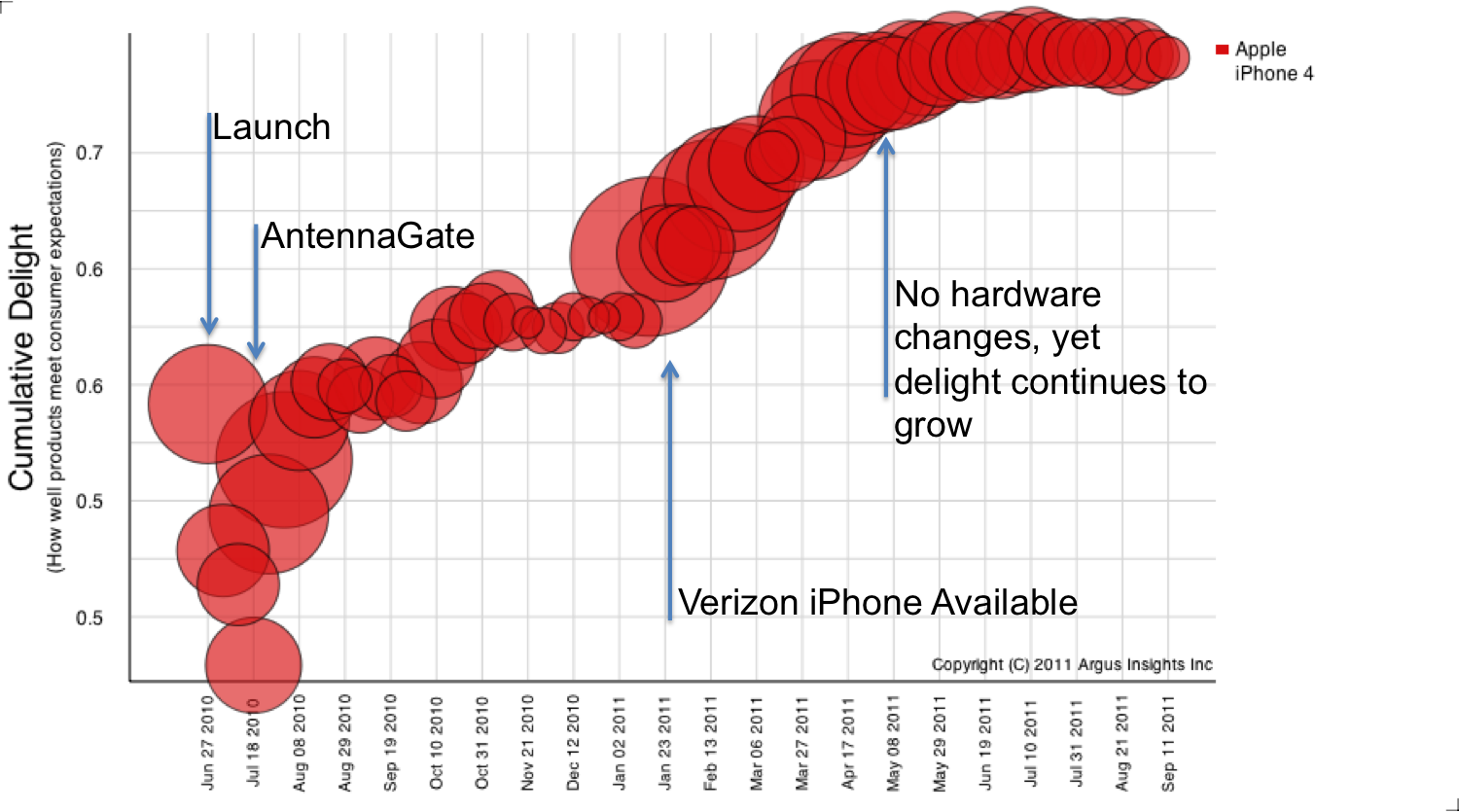
This means that access to quality broadband service is a critical part of the next evolution of T-shaped experiences. Will we see Amazon buy Sprint to spread their wings further? Will AT&T purchase HP’s ailing assets and make a go of it? What will the dominate hardware manufacturers, like Samsung, LG, or Acer, do in the face of these market changes? Spread their wings or exit stage right? WWBGD? (What would Bill Gates Do?) These are questions to be explored in another post…
The world is moving rapidly to T-shaped experiences, because they are more defensible. Consumers enjoy the high-quality user experiences within these maturing ecosystems, but it brings with it significant disruption to the consumer electronics ecosystem—the impact of which we have yet to fully experience.


